Agentic Experience Design for Channel Partner Marketers

HSV

Marketing

SaaS

Overview

Breaking AI out of the Box

I led the project to design the concept of an agentic AI experience for channel partner marketers, grounded in advanced AI interaction patterns. The goal was to move beyond simple conversational interfaces and create an AI system that could dynamically generate UI, adapt and control the interface, and proactively suggest next steps. This concept prototype was designed to communicate the vision and build stakeholder confidence, and it successfully achieved that goal. The work strongly resonated with the client, and Aditya Ahluwalia was extremely happy with the quality of work I delivered in collaboration with twowords design.

Contributions

Lead Designer

AI Interaction Patterns

Design System

Prototyping

Time Line

01 March , 2024

to

31 July, 2024

Background

The Role of Channel Partner Marketers

IT companies often hire channel partner marketing agencies to run campaigns for their products through LinkedIn outreach, cold emails, website campaigns, seminars, and more. The challenge is that channel partner marketers are expected to do it all—design emails, build web assets, write copy, and strategize campaigns—often as a team of just one or two people.

No single person can be an expert at everything, and that gap was costing teams time, quality, and scale. HSV saw an opportunity to address this with a purpose-built tool that brought these capabilities together in one place.
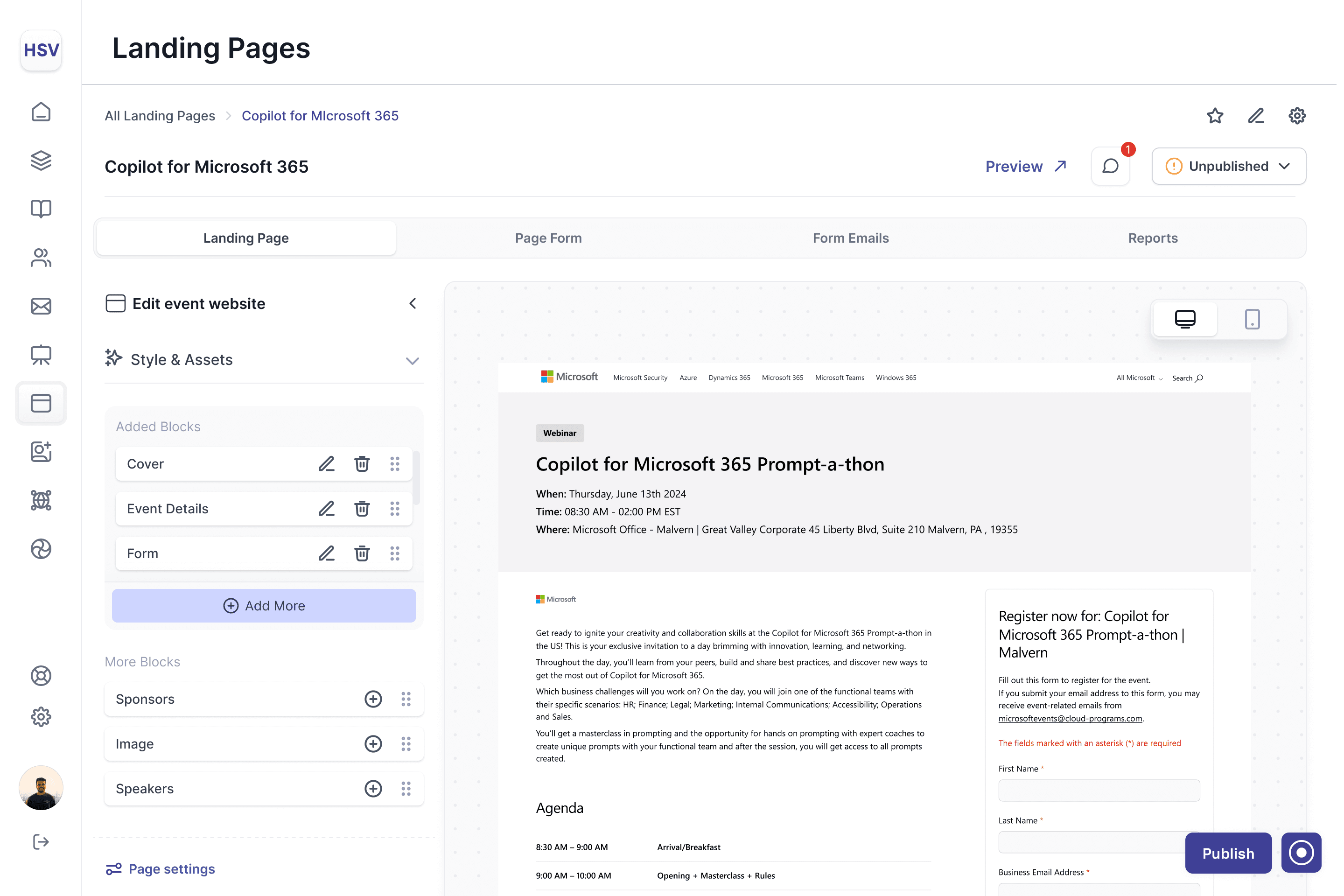
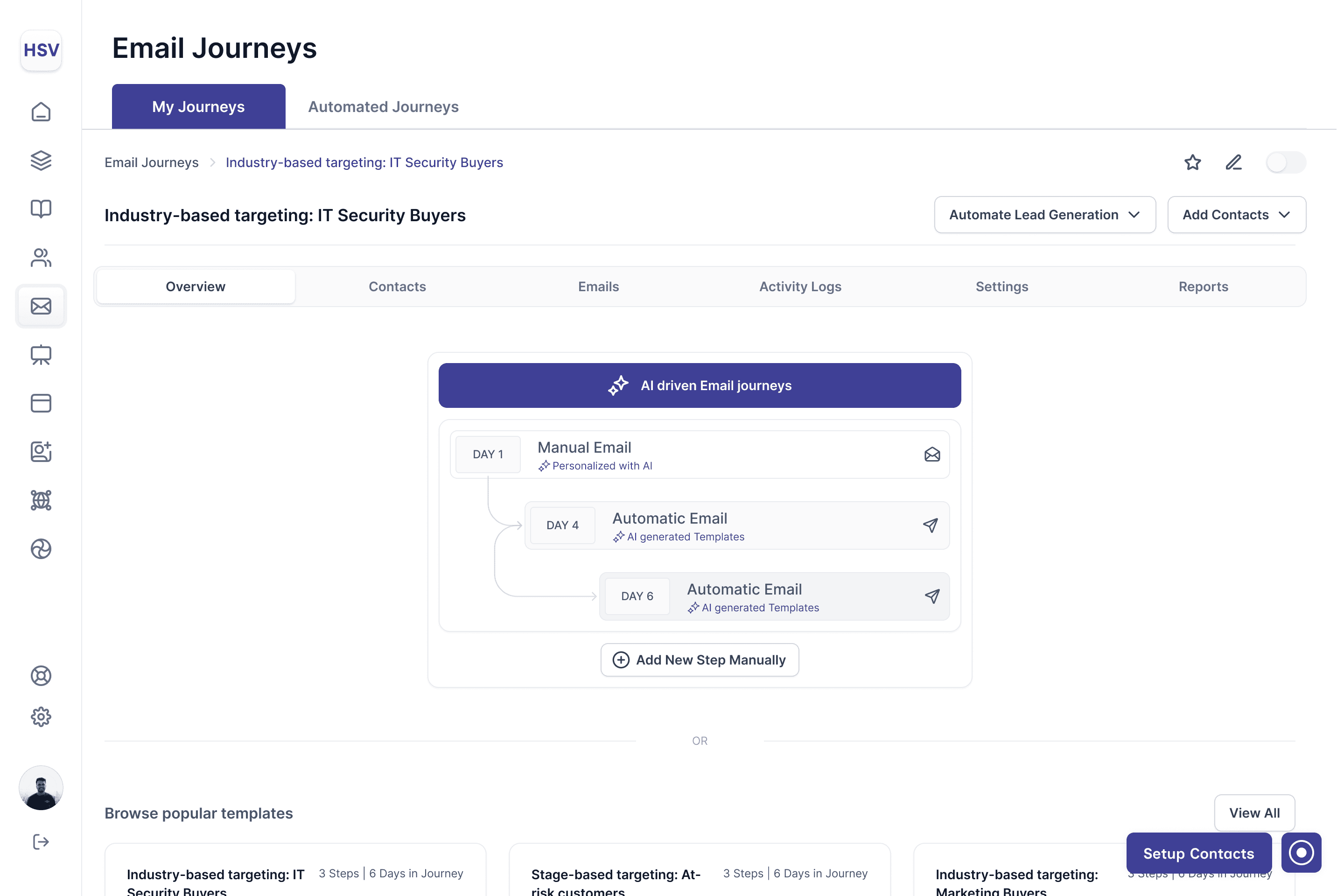
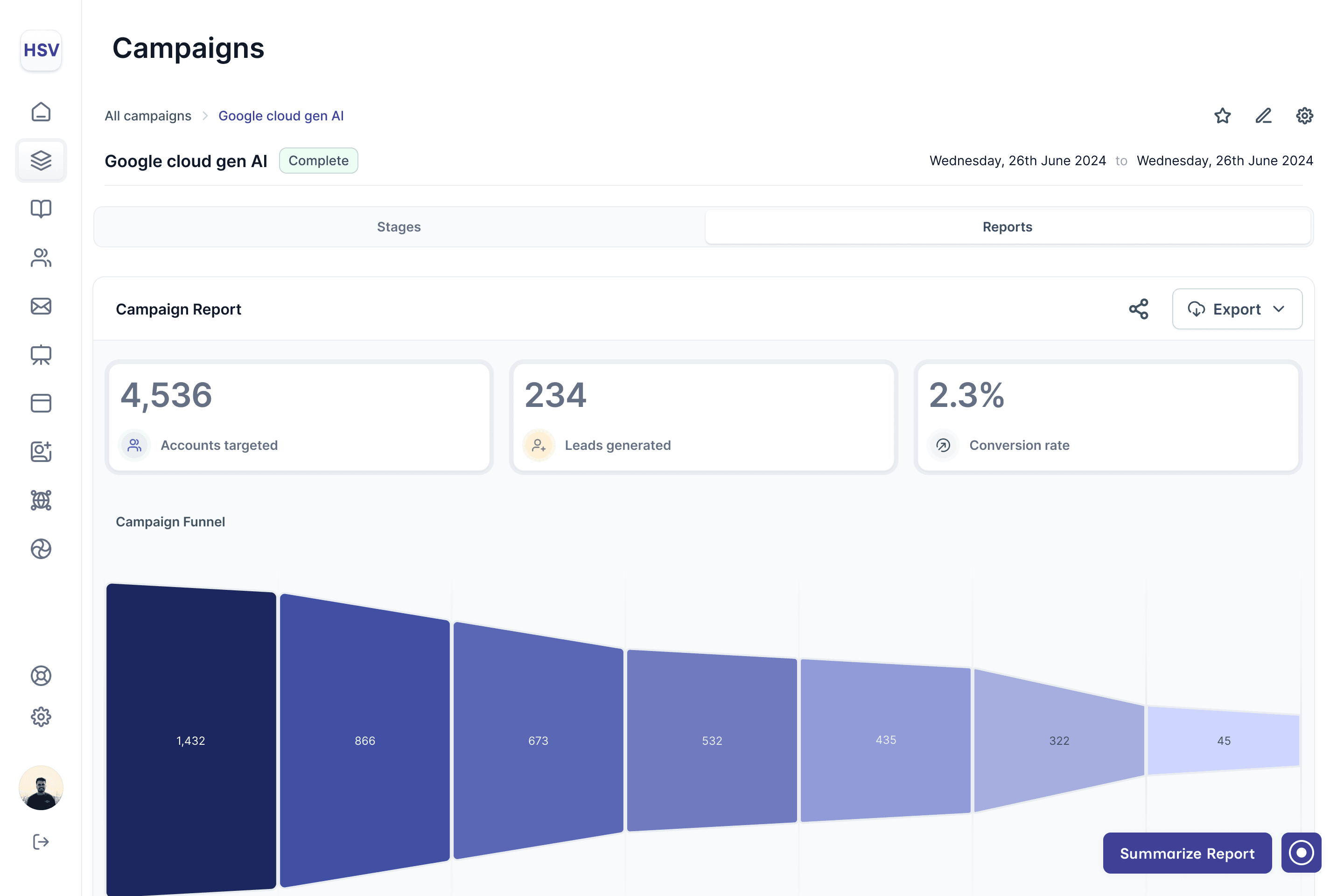
The product was ambitious, perhaps even ahead of its time, but the need it addressed was very real. In partnership with twowords, I led the project to create a concept prototype that moved beyond conventional chatbox-style AI interactions and reimagined AI as a true partner for channel partner marketers, helping them scale their work more effectively.

Solution

AI Interaction Patterns

The core idea was to design the product with AI as an active assistant, one that doesn’t just respond, but takes smart, proactive actions on your behalf. While it can anticipate needs, you remain in control at all times. And when needed, the agent can shift into autopilot, executing tasks while clearly explaining each step to keep the process transparent and trustworthy. The following interaction patterns and systems were designed to make the system feel intuitive and build user trust.

Contextual Actions

CTAs are key drivers of an experience—they signal what the tool can do and guide users on what to do next. In complex dashboards, however, CTAs often take a backseat because multiple workflows can branch out from a single screen.

What if AI could change that? By understanding the system’s current state, it can surface a dynamic, high-priority CTA tailored to the moment—based on the screen context, the user’s task list, or their role. This not only simplifies decision-making but also creates a clear entry point for an agent-driven experience, replacing the “blank canvas” problem with meaningful, contextual actions instead of static presets.
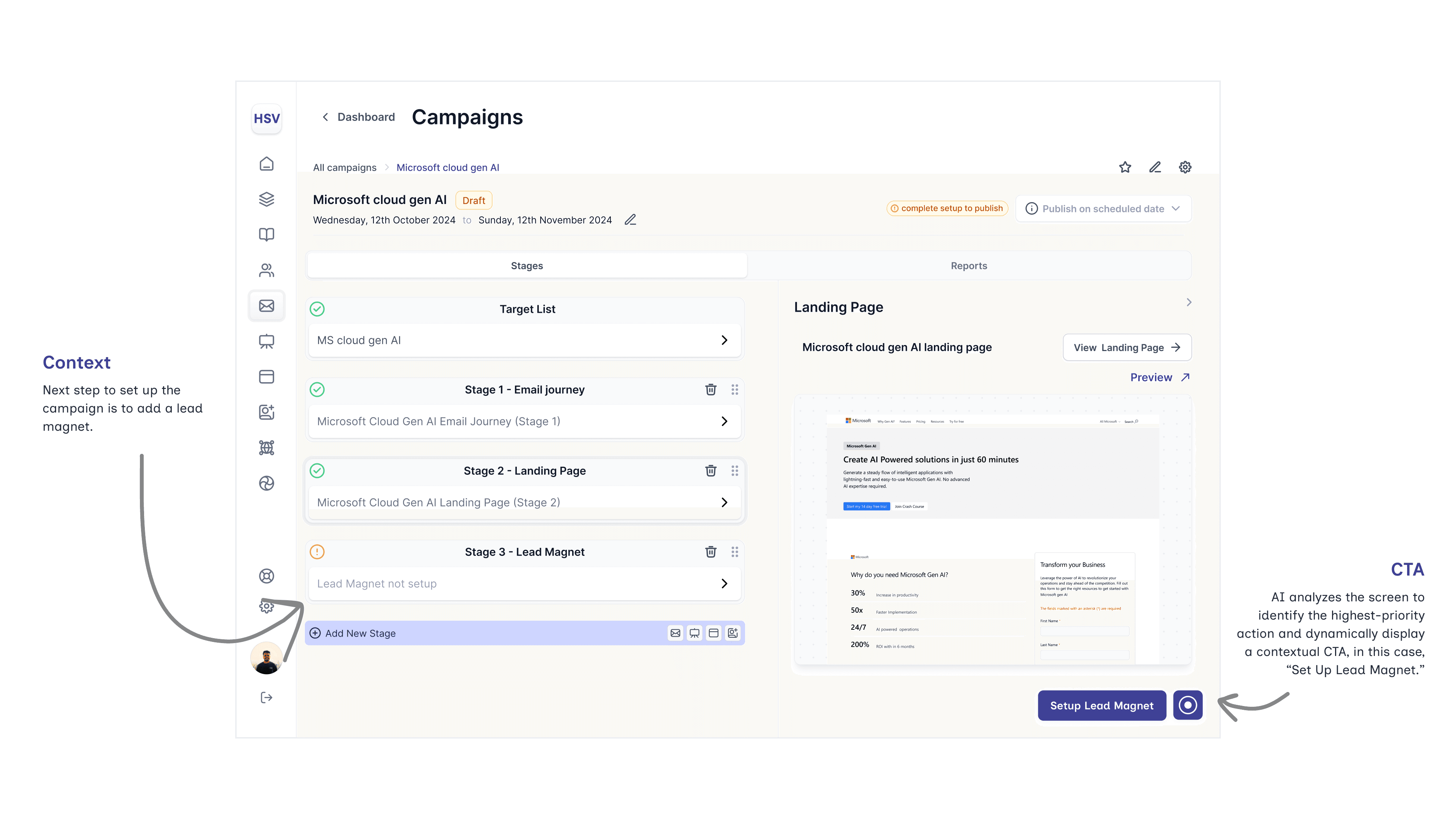
Adventum Dashboard Mockup

Generative UI

Ally, the agent we designed, doesn’t jump ahead without context—it’s built to be flexible. Unlike agents that take full control too early, Ally adapts as it learns. When it doesn’t have enough information to proceed, it dynamically generates UI to help you make decisions instead of guessing. If something wasn’t defined in the initial prompt, it surfaces options for you to choose from. The overall experience is designed to minimize the need for constant prompting while keeping you in control.

Smart Themes

Dynamic UI needs structure. Building on HSV's existing primitive system, we developed a robust variable system with expressive theming, allowing the interface to adopt any brand color through a variable structure that generates 10 shades per color, ensuring both consistency and range across the entire UI. This mattered because HSV was planning to launch the product as white-label software, where client companies could plug in their own branding and have it feel native to their product rather than borrowed.

Agentic Experience

Finally, an experience that breaks AI out of the chat box. When AI can define its own tasks, execute them automatically, and show exactly what it's doing at each step, it builds trust through transparency while feeling genuinely assistive. The key is knowing when to step outside the bubble: any time an action touches the actual interface, the AI surfaces into it rather than staying confined to a chat thread.

Retrospective

AI Interactions are Different

The core insight from building this product was that AI interaction is fundamentally a systems thinking problem. The interactions need to be smart enough to act autonomously while explaining each step, and flexible enough to offer exit points and alternate paths at every turn — because that's what builds user trust. Every scenario has to be accounted for: the interface needs to handle dynamic system states gracefully, and as the product evolves, those changes should happen within a defined system rather than ad hoc. That's where all the systems thinking lives, designing the rules so the product can grow without breaking.

It is by logic that we prove, but by intuition that we create.

Let's Get in Touch

Copy component

Copied

nabhishah@gmail.com