Overview
An exploration of ego conveyed through a richly tactile form
Skills
Time Line
1 Oct, 2025
to
29 Oct, 2025
Background
Revisiting My Childhood Through a Fictional Character
Iron Man: Armored Adventures was one of my favorite childhood shows. It follows the iconic Marvel hero as he battles the Mandarin, a character whose powers come from his ancestral lineage. When I got the chance to create a print narrative, I immediately knew I wanted to reimagine characters from this series and shape them into a story that felt personally meaningful to me.
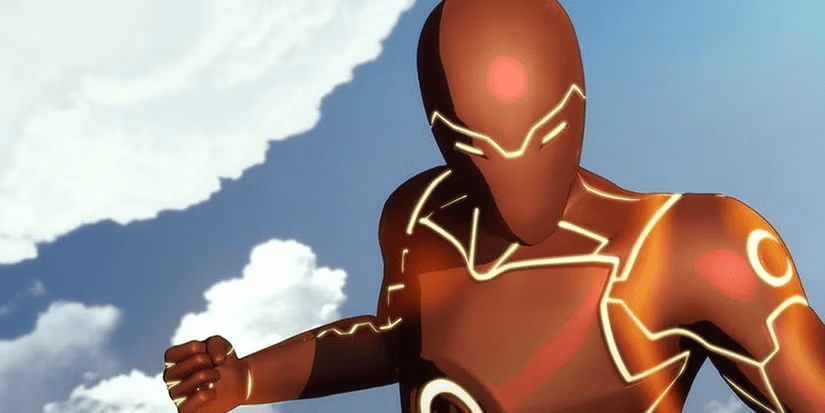
A Still from Ironman Armored Adventures
I chose Iron Man’s 2099 suit from the show, as shown in the image above, as the main character because its glowing elements strengthened the metaphor of light as a source of power and goodness, which is central to my narrative. While the story uses this version of Iron Man, it follows an entirely original plot with a completely new antagonist.
Problem
How Do I Tell a Story with Art?
This project had a tight, month-long timeline, so I narrowed the scope to 16 artworks. My main challenge was figuring out how to tell a complete story within that constraint. I also wanted the visuals to carry the narrative, which meant keeping the text minimal just one line of dialogue per artwork to provide context without overshadowing the illustrations.
Time
The biggest challenge was conveying a complete narrative, background, plot, and climax, within the constraints of just 16 artworks.
Format
I have a unique art style where I work digitally but incorporate traditional paintbrush techniques, creating organic brushstrokes and natural shading. Capturing this same tactile feel in digital prints would have been a challenge
Solution
Finding Stories in Moments and Conveying Them Through a Tangible Dimension
A straightforward and concise narrative
To maintain focus on the artwork and convey the story visually, I used text as a supportive element with minimal words, yet still communicating a complete narrative. Beginning with a third-person perspective allowed me to provide the background efficiently, making it possible to present a full story arc within the constraints. Below is the complete script of the story: [.] represents the third-person perspective, [Eli] is the protagonist, and [Kharm] is the antagonist.
[.]
Eli, is wrapped in a glowing red suit.
light pulses through his every muscle,
& he moves with impossible speed
[.]
Day or night, his light never fades.
Eli keeps the city safe.
[.]
The sky cleared as Kharm's voice echoed
Eli, stared at the sky for hours.
The city's changed completely after that
Glowing in a way it never had before.
[.]
In a dimly lit room of his home in Vyimshi, a city in
Southeast Asia, Eli discovered a glowing energy.
[.]
With a new spirit and a fresh dream, he crosses oceans to
fight crime, save lives in the world’s greatest city,
and pursue his own destiny.
[Eli]
I refuse to let the city fall.
It's where countless dreams, including my own, are built.
What good are these powers
if the people and the city vanish? I must save them first.
[Kharm]
Better late than never.
I hope you understand the responsibility.
You were chosen to lead, not to rule
lead with empathy and humility.
Fight fearlessly, but don’t fight to spread fear.
[.]
It’s fine day today, but wait..
[Kharm]
Bring me your hero—or there will be no tomorrow.
Coward, where are you?
I’ve come to take back what I created.
I am the creator of the light.
Light you proudly call your own.
[Kharm]
Fight me or save your world
the light will be mine either way.
[Eli]
Save the chatter.
I’ll finish you off in a pinch,
then resume my Sunday with my world.
[Kharm]
Dumb.
[Eli]
Ah!
Time to shine.
Another fool thinks they can beat me — let them.
I’ll reward this thing with something nice for making my
Sunday perfect.
[Kharm]
Wherever you go, the world suffers.
[Kharm]
You have killed more,
than you have saved with your light.
You don’t deserve it.
I, the creator of your light, have come to take it back.[Eli]
Back off. I’m the city’s guardian.
Defy me and face the price.
[Kharm]
Guardian?
See what’s behind you.
Script
Creating static scenes that feel dynamic.
To tell the story within a limited number of frames, I strategically selected key moments that imply both what happened before and what follows. In the example below, the first image shows the hero about to land, suggesting the act of landing without revealing what comes next. Similarly, the third image shows the hero already present, but leaves the question of how he arrived. I chose the second image as the key frame because it not only captures the moment of landing but also shows the transition as the hero begins to stand up, making it the most complete and expressive moment in the sequence.
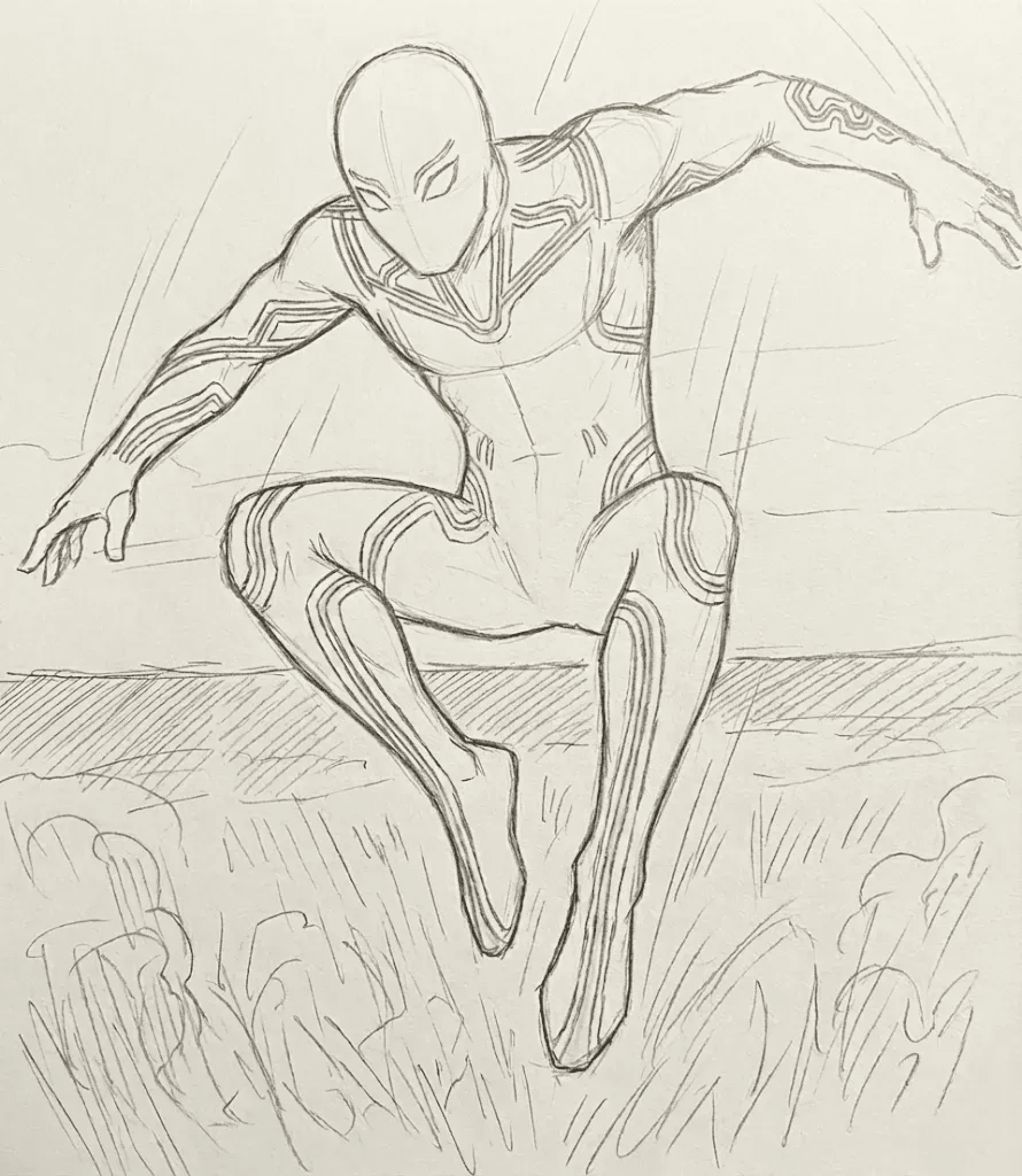
Protagonist about to land
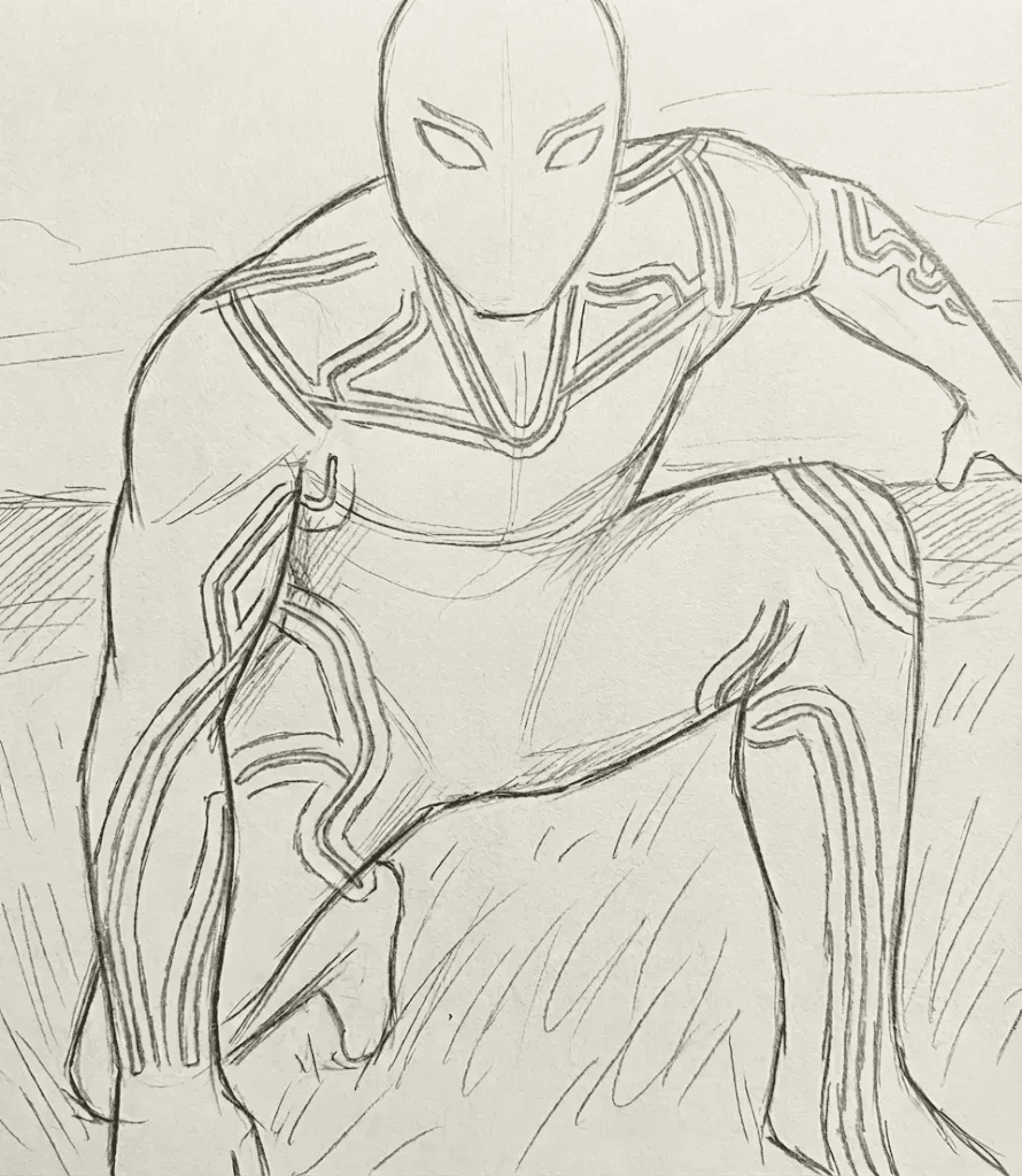
Protagonist in landing pose
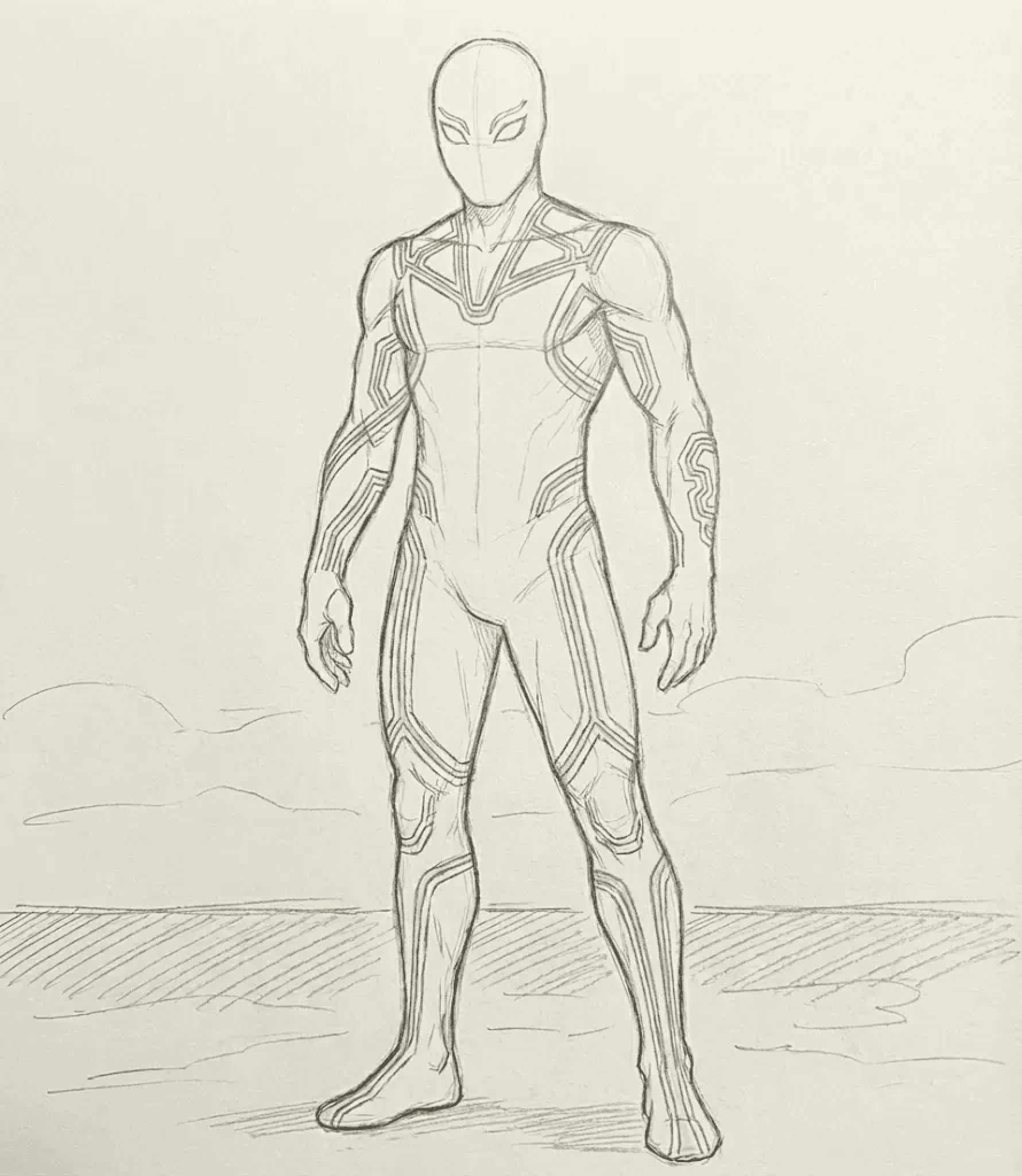
Protagonist standing
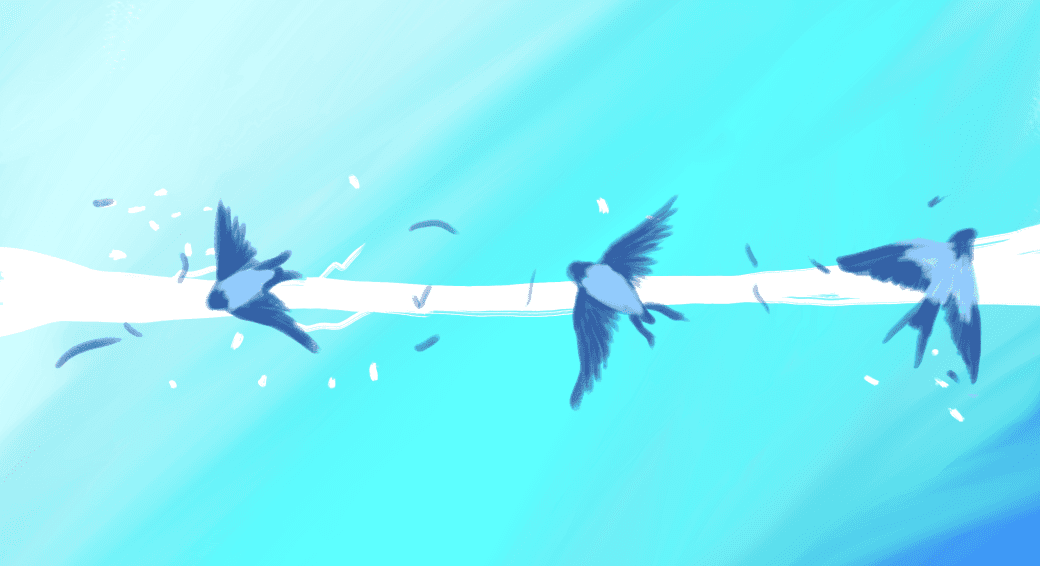
Material that supports the visual aesthetic.
The art style relies on expressive brushstrokes and shading inspired by traditional canvas painting. This made choosing canvas paper for printing a deliberate and essential decision, rather than the more common matte or glossy comic papers. While this choice introduced challenges with binding, the final outcome felt visually rich and organically textured.
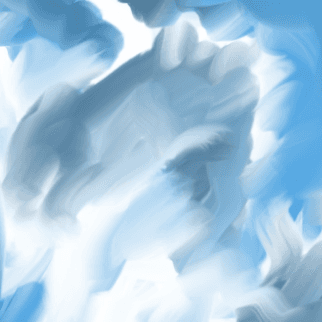

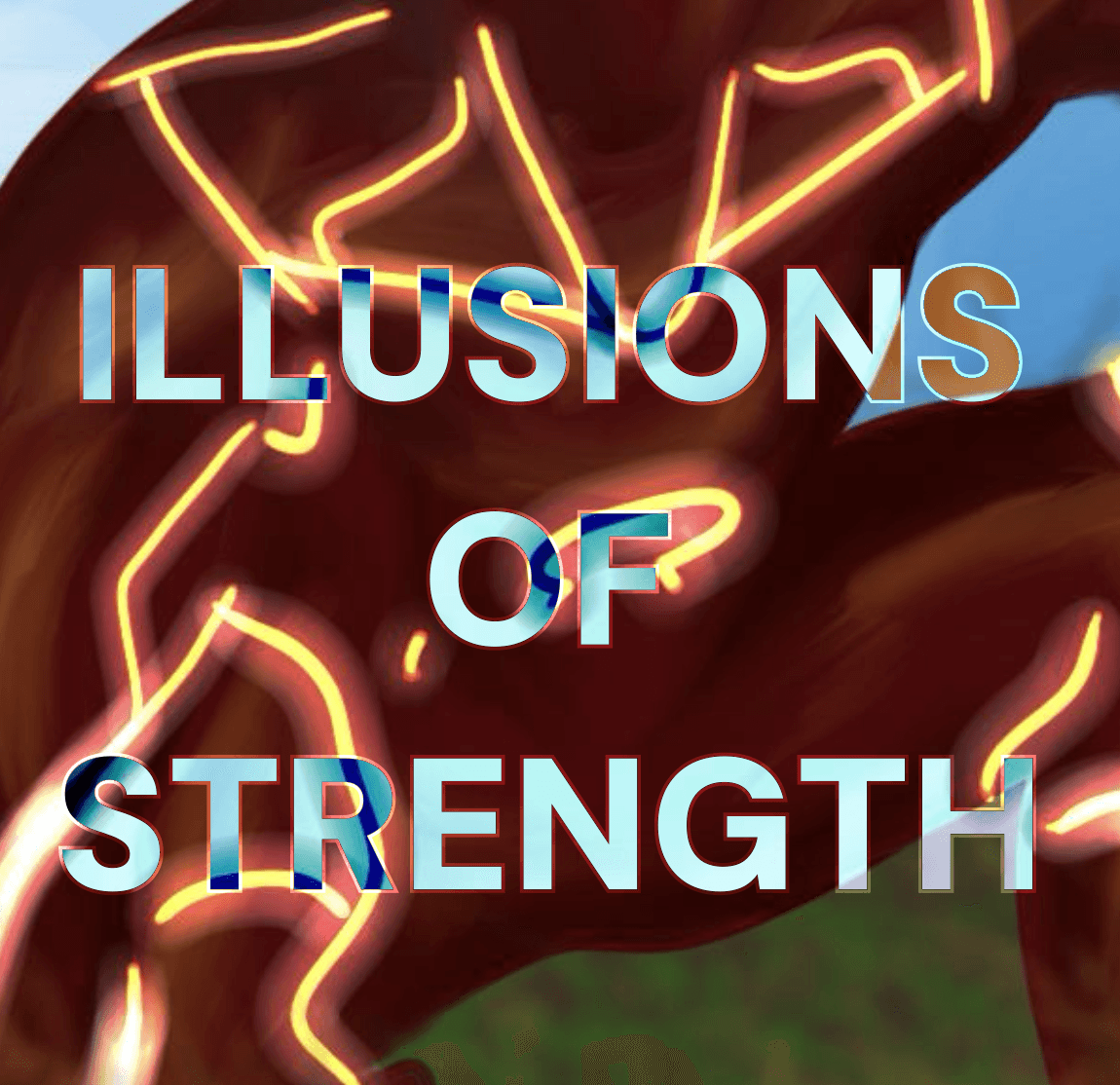
In contrast to the other artworks, the cover page was intentionally designed to stand apart. To create strong contrast between the background and the title, it was given a distinct chromatic treatment. This effect truly came to life when printed on glossy paper, where light reflects off the surface, making the text feel vivid and almost luminous.

Process
Quick Ideas to Detailed Art
To rapidly move from idea to sketch, I described each scene as an image prompt and generated visuals that accurately captured character positions and backgrounds, giving me strong references to begin my drawings. Since the generative images varied in style, I applied consistent brush strokes to unify them and make the artwork feel cohesive. Below are a few examples of images generated for ideation to final sketches.
Outcome
An Original Comic Narrative Featuring Marvel’s Iconic Iron Man Suit
As a result, I was able to create a narrative featuring one of my favorite heroes and produce digital artwork that translates into a realistic aesthetic when printed on canvas, giving it a tangible, physical feel. The story follows a complete arc from background and plot to climax and resolution. Designing the story within these constraints of limited frames was an exciting experience.
Retrospective
Reimagining Favorite Characters Through Original Storytelling
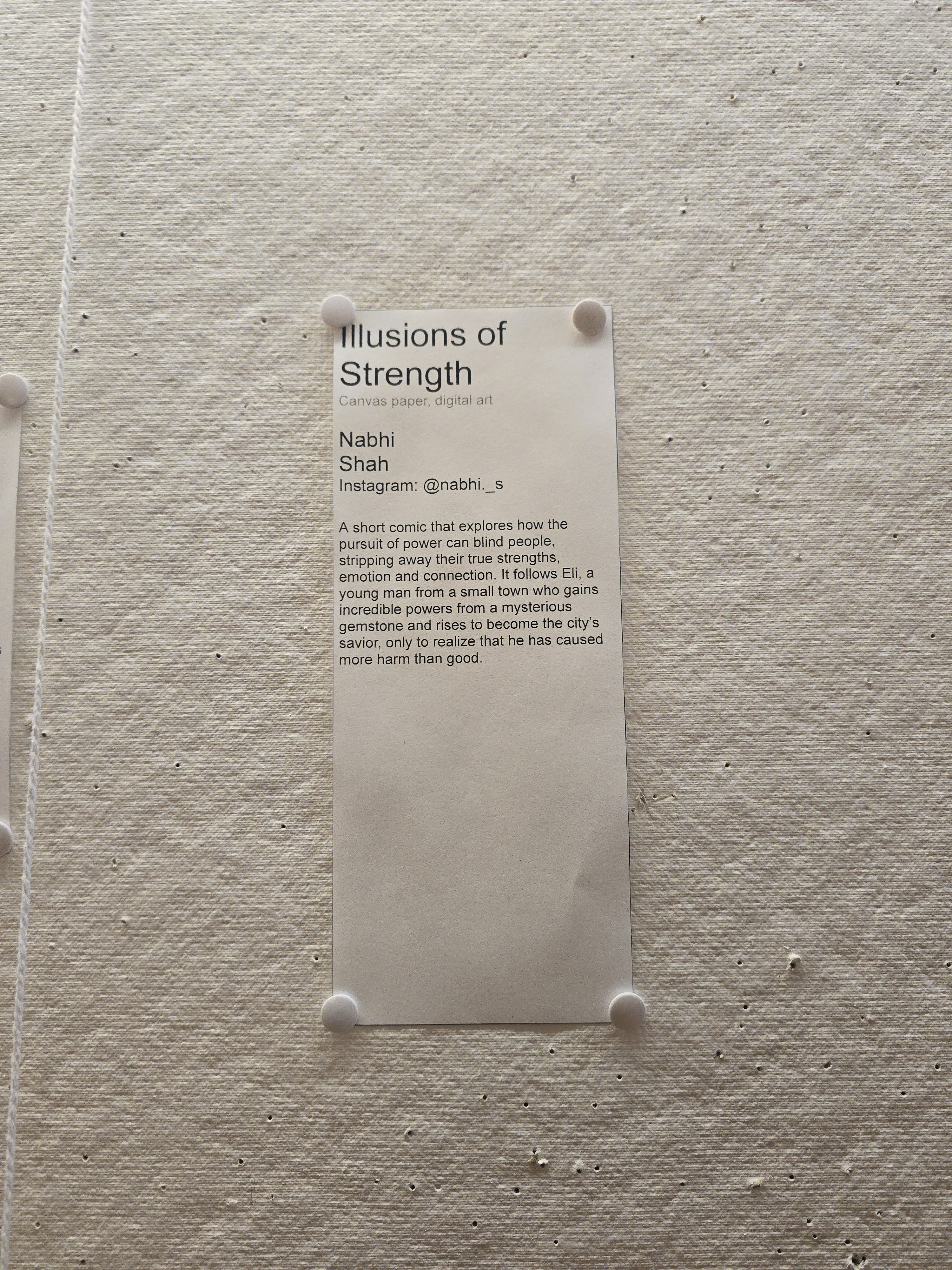
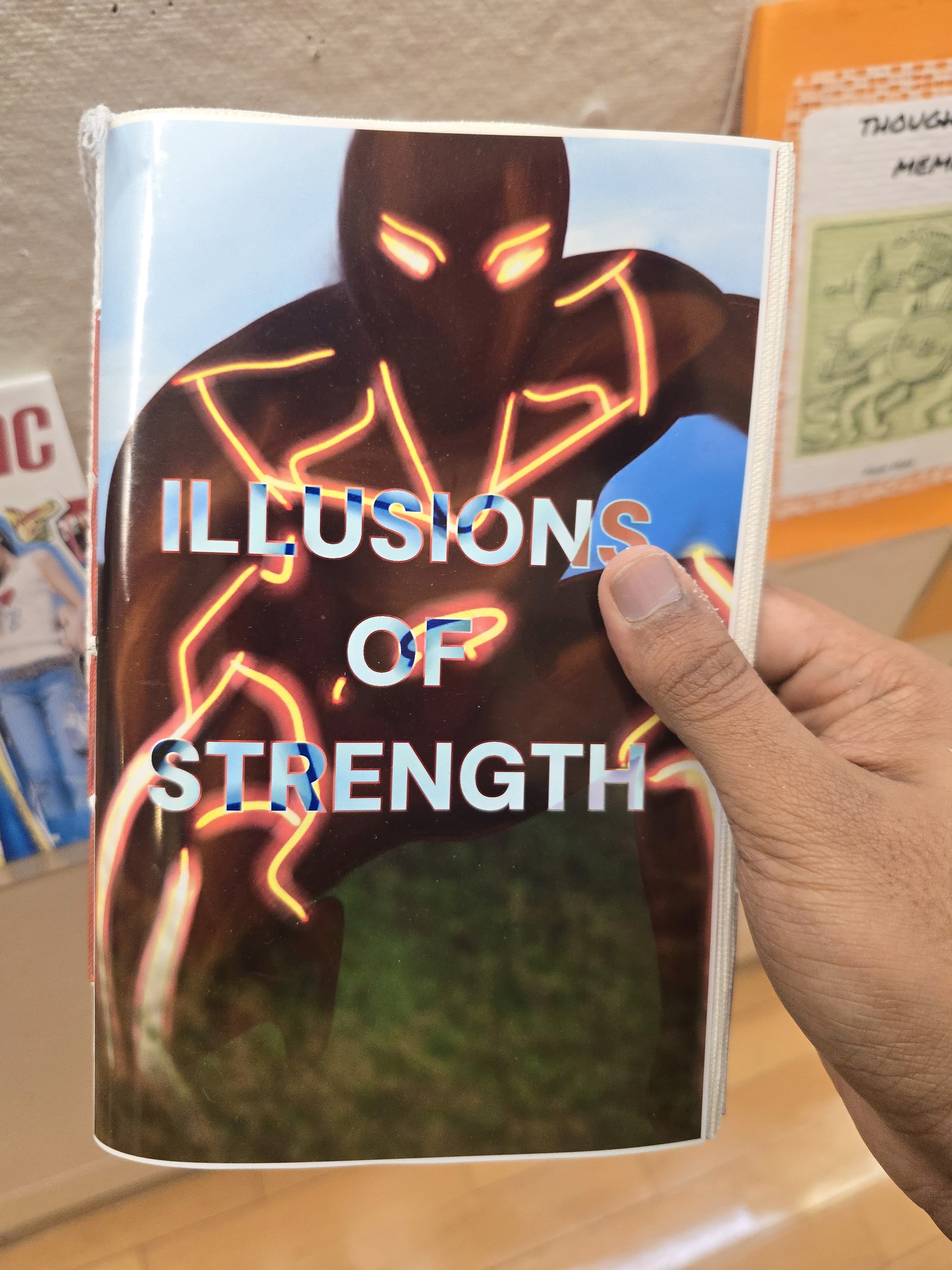
The comic was showcased in an exhibition at the Pratt Institute School of Information alongside other storytelling class projects. It received praise for its original narrative and unique print quality, especially the way the art style complemented the paper choice. The experience also gave me valuable insights into how dynamic stories, filled with action and movement, can be effectively conveyed through still images.
Process Makes Art Executable
While I believe that art requires time and shouldn’t be judged solely on execution, in terms of production, quickly exploring ideas to establish a basic form before refining the essential details can make the process more efficient.
Form is as Important as Function
While the visual aesthetics of an artwork carry most of its impact, pairing them with the right form, such as appropriate paper, style, and colour modes, adds an extra layer of depth.
It is by logic that we prove, but by intuition that we create.
Let's Get in Touch